YOU’RE ONLY HEARING HALF THE CONVERSATION
Most people assume conversations are pretty straightforward. One person talks, the other responds, information gets exchanged, and things move forward.
But if you’ve ever walked out of a meeting thinking, “That didn’t go how I expected,” you’ve already felt what’s really happening.
There are always two conversations going on at the same time.
There’s the obvious one, the words, the facts, whatever is being said out loud. And then there’s the quieter one that sits underneath it, the part where someone is deciding whether they trust you, whether they feel comfortable, whether they actually believe in what you’re saying.
That second part doesn’t get announced. No one says, “I’m not fully convinced yet.” But you can feel it if you’re paying attention.
Take something simple like, “We’ll need to think about it.” Sometimes that’s exactly what it means. But a lot of the time, it’s someone buying time, or sitting with a concern they haven’t said yet, or not quite feeling settled enough to move forward.
Where most people go wrong is they respond to the words. They add more information, more explanation, more talking, hoping that something in there will land.
But that’s usually not what’s needed.
The moment someone pauses or hesitates or gets a little vague, that’s not a cue to speed up. It’s usually the opposite. Something is trying to surface, and if you rush past it, you miss it completely.
The people who are really good at this don’t jump in right away. They notice the small things, like a slight pause before someone answers or a shift in tone when a certain topic comes up. It’s subtle, but it tells you a lot more than the words alone.
If you want to try one small shift this week, don’t overthink it. The next time someone says something like, “We’ll think about it,” resist the urge to jump in with more detail. Give it a second and just ask, “Can I ask what you’re thinking through?” Then actually listen.
That question will open up more than another five minutes of explaining ever will.
Most people spend a lot of time trying to say the right thing. The better move is paying attention to what’s actually happening in the moment, because every conversation has both layers, the one you hear and the one underneath it.
Once you start noticing that second one, it’s hard to ignore. And it changes how you show up in every conversation after that.
Curious where you’ve seen this show up? Hit reply; we read every email.
KEEP THE CONVERSATION GOING
If this hit, there’s a lot more of this on our YouTube channel.
We’ve been pulling clips and full segments from podcast conversations that break down moments just like this; where conversations shift, stall, or move forward, and what’s actually happening underneath it.
It’s not polished theory. It’s real conversations, real reactions, and the small things that make the difference.
THIS MONTH’S BLEND
The best communicators don’t rely on one approach; they build their own blend over time.
A little perspective here, a new question there, something they picked up from a conversation, a podcast, or a moment that didn’t go how they expected. It all adds up.
This is where we share what’s been in our cup lately. Sometimes it’s a book or a podcast. Sometimes it’s a small shift that changes how a conversation unfolds. And sometimes it’s something unexpected we haven’t stopped thinking about.
Because great communication isn’t one perfect technique; it’s a blend of ideas, awareness, and experience that shapes how you show up.
“10 Ways To Have A Better Conversation” (TED Talk) by Celeste Headlee
If you’ve ever left a conversation thinking, “I said everything right, so why didn’t it land?” this is worth 10 minutes. It’s a reminder that the real shift isn’t in your pitch, it’s in how you show up while the other person is talking.

Skill to Practice This Week: Ask One More Question
When you feel the urge to respond, explain, or move the conversation forward… ask one more question instead. Not a big, complex question. Just one layer deeper than where you are.
“What’s making you hesitate on that?”
“What would need to feel different?”
“What are you comparing this to?”
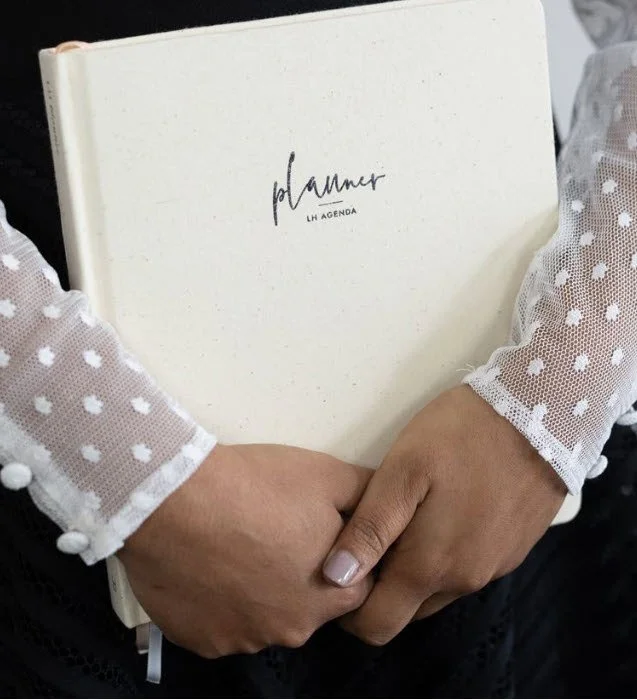
What We’re Using: LH Agenda
We like this for one simple reason; it creates a natural pause after conversations. Not to capture everything that was said, but to jot down what actually happened. Where did the energy shift? What felt off? What didn’t quite land? Because getting better at reading the second conversation isn’t about adding more techniques. It’s about noticing more of what’s already there.Most people move on too quickly. This helps slow that down just enough to see it.

WHERE TO FIND US
May 6/7 | In Person Training in Dallas
May 12/13 | Certified S&P Coaches Training, sessions to
train our future sales coaches!May 14 | Virtual Client Training
Jun 1/2 | In Person Training in Los Angeles
Jun 4 | WISE Virtual Training
1:1s all month long!
WE WANT YOUR FEEDBACK
The goal isn’t more content; it’s better conversations.
So before we keep creating, we want to hear from you. What would make this newsletter more valuable in your day-to-day?
Your feedback helps us focus on what actually moves relationships and decisions forward; not just what sounds good on paper.