THE POWER OF MICRO-MOMENTS
We tend to think the biggest outcomes in business come from the biggest moments.
The pitch.
The negotiation.
The closing conversation.
But in reality, most decisions aren’t made in those moments.
They’re made in the micro-moments leading up to them.
A micro-moment is exactly what it sounds like. A brief interaction that shapes how someone feels about you, your credibility, and whether they trust what you’re saying.
Google originally coined the term while studying consumer behavior. They found that people make decisions in quick, instinctive moments when they’re looking for information, evaluating options, or deciding what to do next.
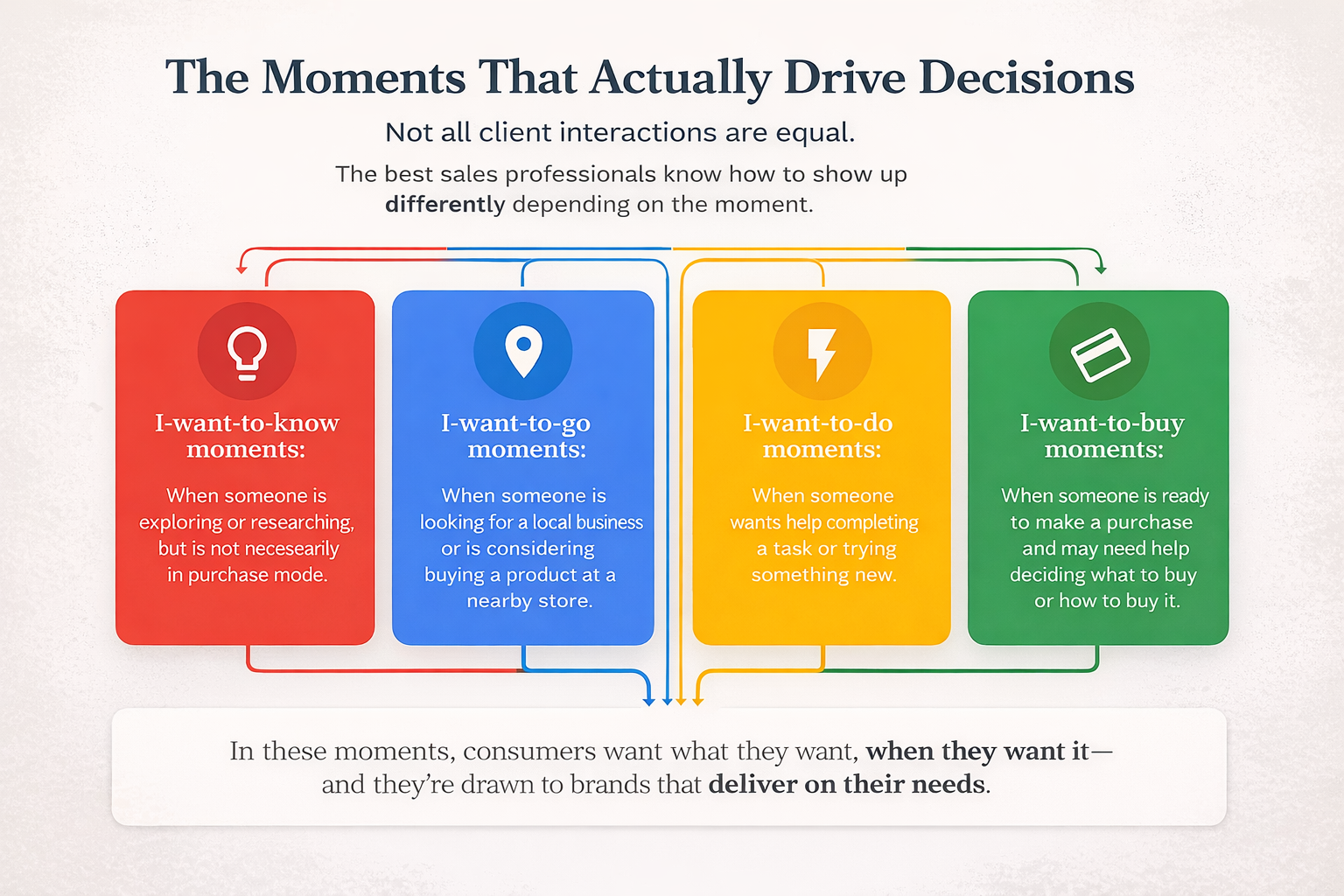
Those seconds matter more than most people realize. And the same thing happens in conversations.
A slight pause before you respond.
The way you acknowledge a concern.
Whether you interrupt or lean in.
Those small signals communicate more than your prepared talking points ever will.
There’s a reason for that.
Harvard researchers studying first impressions found that people begin forming opinions about credibility, competence, and trustworthiness within seconds of an interaction. Not minutes. Seconds.
That means before your carefully prepared explanation even begins, your communication style has already started shaping the outcome.
I see this all the time when working with sales teams and leaders.
People spend a lot of time planning what they’re going to say. They script their pitch, rehearse their value proposition, and think about how they’ll guide the conversation to the outcome they want.
But the micro-moments inside the conversation are what determine whether the other person is actually listening.
Did you acknowledge their perspective?
Did you ask a thoughtful follow-up?
Did you allow space for the conversation to breathe?
Or did you rush to the next point?
Trust is rarely built through a single statement. It’s built through a series of small signals that tell someone you’re paying attention.
Psychologists sometimes refer to these as thin slices of communication. Our brains pick up subtle cues in milliseconds and form impressions almost instantly.
The best communicators understand this intuitively.
They aren’t rushing to get through their points.
They’re paying attention to the signals inside the conversation and adjusting in real time.
And this is where the BREW framework becomes incredibly powerful.
The first step in BREW is Be the Moment. Because if you’re not fully present in the interaction, you will miss the signals that matter most.
When you’re present, you start to notice the micro-moments:
A hesitation before someone answers.
A shift in tone when a certain topic comes up.
A moment where curiosity opens the door to a deeper conversation.
Those moments are where influence actually happens.
Not in the scripted pitch.
In the interaction.


WE WANT YOUR FEEDBACK
The goal isn’t more content; it’s better conversations.
So before we keep creating, we want to hear from you. What would make this newsletter more valuable in your day-to-day?
Your feedback helps us focus on what actually moves relationships and decisions forward; not just what sounds good on paper.
THE CONVERSATION TOOLKIT
Every great communicator is always learning. The Conversation Toolkit is where we share things that sharpen how we show up in conversations; books, podcasts, questions, research, and the occasional unexpected gem we’ve stumbled across lately. Sometimes it’s a negotiation strategy. Sometimes it’s a leadership insight. And sometimes it’s something a little more fun or offbeat that we just can’t stop recommending. Because great communication isn’t built from one perfect technique; it’s built from curiosity, experimentation, and collecting ideas that help you see conversations differently.
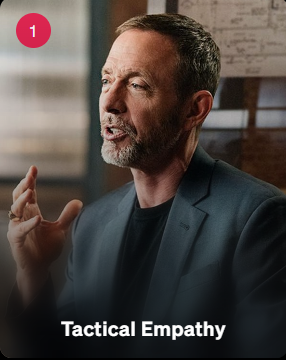
If you want to understand influence in real conversations, this is it. Chris Voss breaks down:
Tactical empathy
Labeling emotions
Calibrated questions
What stands out most is how much of it comes down to tone, pacing, and listening; the micro-moments again.

What We’re Listening To
Episode 330: Zoe Chance | Having Ethical Influence On Others
Zoe reframes influence in a way that feels grounded and real. It’s not about pushing an outcome; it’s about how you show up in each moment of the conversation.
A few ideas that stuck:
You don’t build influence at the end of the conversation; you build it along the way.
People open up when they feel understood, not when they feel managed.
The smallest responses often carry the most weight.

Something We’re Loving: Phone Down Conversations
No notes, no typing, no multitasking. Just being fully in the conversation.
There’s something powerful about giving someone your full attention; it’s rare, and people feel it immediately.
In a world full of distractions, presence stands out.

WHERE TO FIND US
APR 28/29 Client Consulting in Los Angeles
APR 30 Interview Moderation for Bose Akadiri
1:1s all month long!
May 6/7 In Person Training in Dallas
May 12/13 Certified S&P Coaches Training, sessions to
train our future sales coaches!May 14 Virtual Client Training